Turkana marks World AIDS Day with stark warning over rising HIV infections
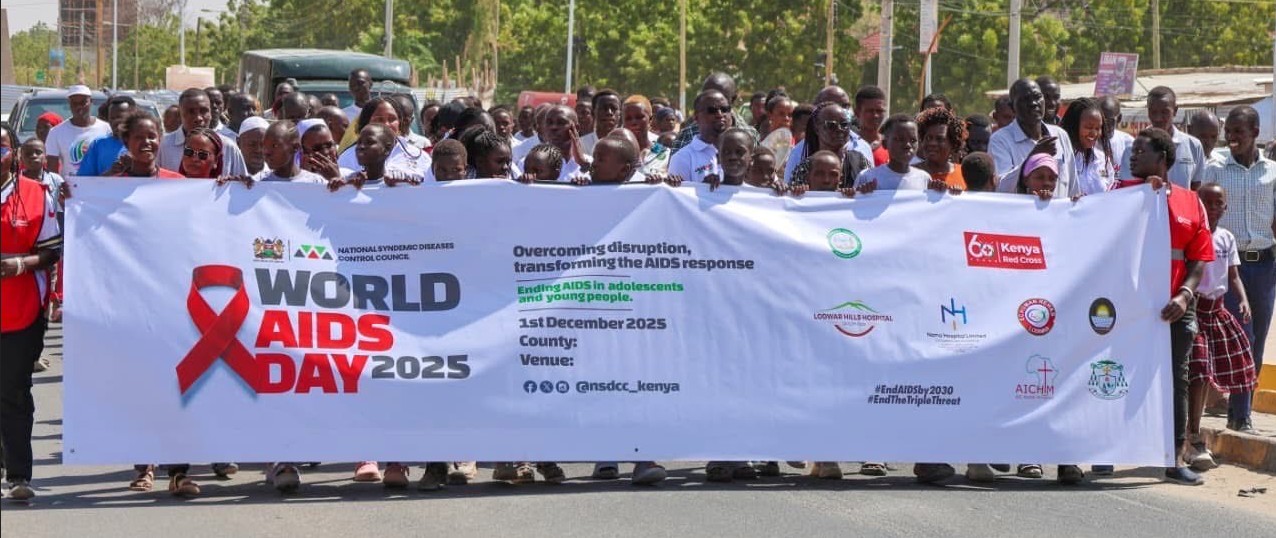
Turkana County leaders used World AIDS Day in Lodwar to warn of rising HIV infections and deaths, unveil new highway health outreach, and urge shared responsibility as donor support declines.
Turkana County marked World AIDS Day on Monday with a strong warning about rising HIV infections, even as leaders reaffirmed their commitment to ending AIDS by 2030.
The event, led by Deputy Governor John Erus, took place at the Livestock Market Grounds in Lodwar and brought together county officials, national representatives, health partners and community members.
More To Read
- German researchers find highly effective HIV antibody
- Review meeting highlights barriers to immunisation, maternal health in Turkana
- Global HIV response facing worst setback in decades, UNAIDS warns
- High Court upholds ruling against KDF for HIV discrimination in recruitment
- Turkana stakeholders urge reforms to fisheries Bill to protect local fishers and blue economy
- Ruto targets faster healthcare access with KEMSA direct medicine deliveries to hospitals
Observed globally every 1 December, the day offers a moment to reflect on progress, honour lives lost and renew the commitment to the fight against AIDS. This year's theme, "Overcoming Disruption, Transforming the AIDS Response”, highlighted the triple threat of new HIV infections, teenage pregnancies and sexual and gender-based violence—issues that continue to affect Turkana’s youth disproportionately.
Opening the ceremony, Erus honoured the more than 32 million people globally who have died from AIDS-related illnesses. He acknowledged progress in reducing stigma and improving access to treatment, but urged continued vigilance.
"We are strengthening community health services and expanding outreach to remote and nomadic communities to reduce disparities in access to HIV prevention, testing and treatment," he said.
Erus reaffirmed that Turkana’s HIV interventions are aligned with the Kenya AIDS Strategic Framework and integrated into the county’s Universal Health Coverage agenda to ensure accessible and affordable services.
He also highlighted the county’s efforts toward the triple elimination of HIV, syphilis and Hepatitis B among pregnant and lactating women.
The deputy governor outlined the current situation as worrying: 16,925 residents are living with HIV, including 1,013 children. Prevalence has risen to 1.9 per cent, new infections have increased by 63.4 per cent and AIDS-related deaths have surged by 112 per cent over the past year.
"While 95 per cent of people living with HIV know their status, only 58 per cent of those diagnosed are on ART, and just 32 per cent have achieved viral suppression," he said.
County Executive for Health and Sanitation, Dr Epem Joseph Esekon, noted that stigma has reduced significantly due to better access to treatment, but warned of rising infections among adolescents.
Addressing the youth, he advised them to "abstain from sex or practise safe sex," and encouraged men to take advantage of male circumcision services available at county facilities.
Epem also announced a new integrated health initiative along the A1 Highway, targeting high-risk populations with HPV vaccination, cancer and TB screening, HIV testing, substance abuse rehabilitation and SHA registration.
Chief Officer for Preventive and Promotive Services, Agnes Mana, echoed concerns about youth vulnerability, citing increased drug and alcohol abuse.
"Young people aged 15–24 contribute 85 per cent of new adult HIV infections," she warned, calling for stronger coordination of programmes targeting adolescents and mother-to-child transmission.
Chief Officer for Gender and Youth Affairs, Epuu Joseph, urged residents to take personal responsibility for HIV prevention, noting that declining donor support means Turkana must strengthen self-sustaining systems.
Other Topics To Read
"HIV/AIDS is not selective. Anyone can be infected at any time. Our health must first be our personal responsibility," he said.
National Syndemic Diseases Control Council (NSDCC) Board Member Lucy Wanjiku Njenga provided a national perspective, noting that adolescents and young people—who make up 59 per cent of Kenya's population—bear a disproportionate HIV burden.
She reported that 163,000 young people aged 10–24 are living with HIV, with infections among adolescents aged 10–19 rising by 34 per cent between 2023 and 2024. She called for intensified screening, testing and early treatment.
Representing health partners, Sr. Doris Mulongo of the Catholic Diocese of Lodwar emphasised the need to maximise available resources.
"We no longer have the luxury to depend on a line of partners. We must integrate HIV interventions into broader health programs and make the most of what we have," she said.
Deputy Director for Preventive and Promotive Services, Daniel Esimit, called for collective action to fight stigma and strengthen community advocacy.
Deputy County Commissioner Patrick Emase urged closer collaboration between government and partners, warning that girls, women and youth remain most vulnerable to the triple threat.
While closing the event, Erus issued a strong call to action.
"Let us protect our girls, educate our boys and support one another. Ending AIDS by 2030 is within reach, but only if we move forward together," he said.
The commemoration ended with a united message of resilience, responsibility and partnership, even as Turkana confronts rising infections and declining external support.
Officials from the organising committee—including County Multi-Sectoral Coordinator Wamaya Rodgers and Turkana Central Medical Officer Mercy Kawira—were present.
Partners included Kenya Red Cross Society, AIC Health Ministries, Echuman Rehab, Lodwar Hills Hospital, Namo Hospital, Ejok FM, the Catholic Diocese of Lodwar and Turkana University.
Top Stories Today